How to Tell Whether a Movie Prop Is a Clue or Just Part of the Room
Learn to read a movie prop as a story clue or room detail by tracing attention, placement, and repeated use without mistaking visibility for meaning.
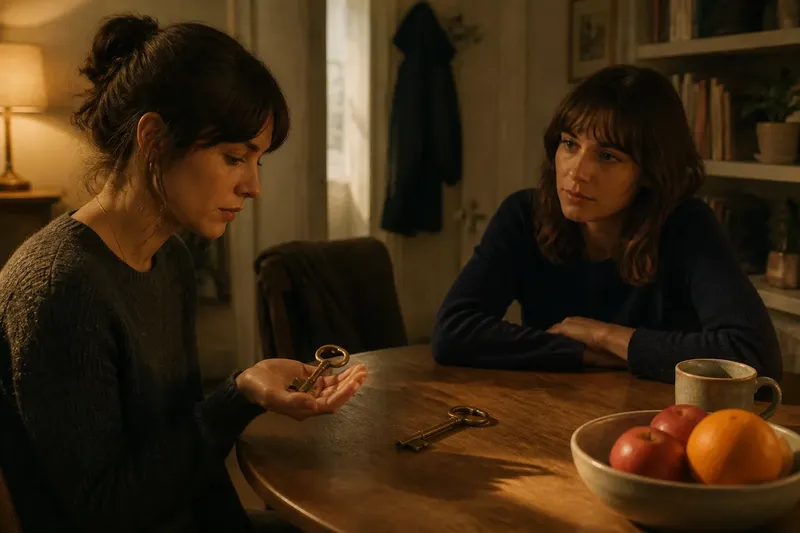
A character turns a brass key over in her palm while another sits untouched beside a bowl of fruit. Both are props, but the camera and the actors give them different kinds of attention. To tell whether a movie prop is a story clue or simply part of the room, look past its presence and ask how the scene makes use of it.
This distinction is not a contest between “important” objects and “meaningless” ones. A handled prop can direct the plot, reveal a character, or establish a practical action. A background object can make a place feel inhabited, clarify how people use the room, or quietly shape the scene’s composition. The useful question is what each object contributes, and how you can tell.
What makes a prop feel like a story clue?
A prop begins to feel narratively charged when the scene singles it out through action or attention. A character picks it up, hides it, checks it, passes it to someone, or hesitates before using it. The object matters not because it is inherently mysterious, but because a person’s behavior gives it a job.
Camera choices can reinforce that job. A close view, a pause after an object enters the frame, or a change in focus can encourage you to watch it. None of these signals proves that the object will matter later; they do show that the film is inviting attention now. The next question is what that attention helps you understand.
A handled object may reveal a decision before the character explains it. Someone who keeps a letter folded in a pocket might be reluctant to share its contents. Someone who sets a glass carefully out of reach may be trying to end a conversation without saying so. In either case, the prop carries meaning through the relationship between an object and an action.
It can also move information between characters. A key passed across a table changes who can enter a room; a photograph turned face down changes what another person is allowed to see. These actions make the prop part of the scene’s cause and effect. It is not merely present: it helps alter what happens next.
What does a background object contribute?
An ordinary object often does useful work without becoming the center of attention. A chipped mug beside a sink, a coat draped over a chair, or a stack of unopened mail can make a room feel specific to the people who occupy it. Such details suggest routines and living conditions without requiring dialogue to explain them.
Background objects also help organize the image. A lamp might frame one character while leaving another in shadow; a crowded shelf can make a small room feel visually busy. The object can guide your eye or set a mood while remaining secondary to the conversation. In that role, it is closer to a chair in a waiting room: its presence shapes how the space works, even if nobody discusses it.
Some background details help establish continuity within a scene. A coat still hanging by the door can imply that a visitor has not left; a tray cleared of dishes may show that someone has been there before the conversation begins. These details support the scene’s basic geography and timing. They need not point toward a later revelation to be worth noticing.
“Background” does not mean “unimportant,” and it does not mean “secret clue.” A film may use an ordinary object to make a room believable, to set a visual rhythm, or to keep the frame from feeling empty. If the object draws your eye once but has no further role, that may be all the scene needs from it.
How do placement and repeated use change the reading?
Placement is a strong clue about an object’s immediate function. An item placed within easy reach may be ready for use; one left behind a closed door may be deliberately separated from the action. Notice whether the prop belongs naturally in that spot, whether someone moves it, and whether the camera gives its position unusual emphasis.
Repeated use can make a prop more significant, but repetition alone is not a promise of plot importance. A character may repeatedly set down a bag because the scene needs to show a restless routine. A recurring glass of water may mark the practical passage of time through a long conversation. The pattern matters most when each return changes the object’s meaning or the character’s relationship to it.
Compare the object’s appearances rather than simply counting them. Does it move from the background into someone’s hands? Does a character who once ignored it begin to protect it? Does it appear after a new piece of information, or does the scene continue unchanged around it? A shift in use or attention makes a stronger case for narrative purpose than mere visibility.
It also helps to notice what the object connects. A prop may link two locations, two characters, or two moments in a scene. If a scarf is carried from an entryway to a bedroom and then offered to another person, its changing placement can track a relationship. The film may be using it as a practical item, a visual bridge, or both.
Which reading approach suits your viewing?
There are three useful ways to read an object, and each suits a different kind of scene. You do not need to choose one for the whole film. Try the approach that fits what the scene is asking you to notice.
Should you follow the handled prop?
This approach suits a tense exchange or a scene built around a decision. Track who touches the object, who avoids it, and what changes after it is moved or used. It works especially well when a character’s actions say more than the dialogue.
Should you read the room’s objects?
Focus on the room’s ordinary contents when the scene is establishing a home, workplace, or shared space. Ask what the objects suggest about habits, access, or the people who spend time there. This is useful when the setting feels informative even though nobody points anything out.
Should you compare an object across its appearances?
Choose this approach when a prop returns and its role seems to shift. Compare its position, handler, and practical use each time it appears. This helps separate a recurring visual detail from an object whose changing use is tied to the scene’s development.
How can you avoid reading too much into a detail?
Start with what you can observe: where the object is, who interacts with it, and whether the scene changes around it. Treat a symbolic explanation as a possibility rather than a fact until the film gives you more to support it. An object can carry several functions at once, or only the plain practical one.
How do you choose what to notice first?
Begin with the scene’s most visible action, then follow the object that seems connected to it. If a character is negotiating, the item being exchanged or withheld may be worth tracking. If the scene is about entering an unfamiliar room, the objects that show how the space is used may tell you more.
Say you are watching an invented scene in which a tenant speaks with a landlord beside a cluttered kitchen table. The tenant repeatedly turns a small key in her hand, while a chipped bowl stays near the window. If she finally sets the key on the table and the landlord changes the subject, the key has affected the exchange; if the bowl remains untouched, it may simply help make the kitchen feel lived in. The scene could still give the bowl another role later, but its presence alone does not establish one.
A practical viewing pass can keep your attention grounded:
- Notice the action. Identify what the characters are trying to do before assigning meaning to an object.
- Track handling. See who picks up, moves, hides, offers, or avoids the prop.
- Check placement. Observe whether the object sits naturally in the room or is brought into the scene’s focus.
- Compare returns. If it appears again, look for a change in use, position, or response.
- Separate function from symbolism. Ask what the object makes possible in the scene before deciding what it might represent.
- Leave room for uncertainty. Keep a reading tentative if the scene has not yet connected the object to a consequence.
These questions are not a code for solving every prop. They help you distinguish a concrete contribution from an attractive guess. A scene may use the same object to support an action, define a room, and carry an emotional association, without giving any one function exclusive claim.
When should you change your interpretation?
Revise your reading when the film gives the object a new job. A prop first seen as background may later be moved, handled, or tied to a decision. That change does not mean you were wrong to read it as part of the room earlier; it means the scene has added information.
The reverse can happen too. A conspicuous object may invite close attention and then turn out to be a practical tool with no hidden message. The attention may have been needed to make an action legible, establish a threat, or keep the viewer oriented. A prop can be prominent for clarity rather than mystery.
When you rewatch, compare the object’s first appearance with the moment you thought it became important. Look at what the camera shows, what the characters do, and what the object enables. This gives you a grounded way to tell whether the film planted a clue, built a believable room, or let one object do both jobs.
The most reliable reading starts small: describe the object’s observable role before naming its possible meaning. For a movie prop, ask what attention, placement, and repeated use actually change in the scene. That habit keeps your viewing alert without turning every mug, key, or coat into a secret waiting to be solved.